
Physical AI and Humanoid Robotics: When AI Acts in the Real World
Physical AI brings artificial intelligence into the real world by enabling machines to perceive their surroundings, plan actions, and carry them out. Humanoid robots are the most visible example of this technology and are already being trialled in initial projects.
Read on to find out what lies behind this technology, where it stands today, and which hurdles still need to be overcome before it can be widely used. Read more…
Industrial robotics: How AI is expanding the range of applications
AI is making industrial robots more flexible: Find out how intelligent image processing and sensor technology are enabling new applications in assembly, handling and quality inspection. Read more…
Digital Product Passport: Why PLM is becoming the data foundation for the product passport
The Digital Product Passport places new demands on the availability and quality of product data. Find out how PLM can help to consolidate information from different systems in a structured way and make it available in a traceable manner. Read more…
MBSE: Mastering complex systems with digital models
Complex products require new engineering approaches: MBSE focuses on digital system models and links requirements, functions, architecture and testing. Read more…
Process Optimization Through CAD/PLM Integration – Lessons Learned from Real-World Experience
In our new technical article, we show: Where CAD/PLM integration offers the greatest leverage; what causes integration projects to fail most often in practice; and how a commercial vehicle manufacturer successfully implemented the transition to Teamcenter Active Workspace as a process project rather than a purely IT rollout. Read more…
Successfully implementing Manufacturing Data Analytics (MDA): Acceptance instead of resistance
Machine data acquisition creates transparency and forms the basis for data-driven decision-making. Nevertheless, many MDA projects fail not because of technical issues, but due to as lack of acceptance amongst staff. Find out what lies behind this resistance and how an MDA solution can be successfully implemented.. Read more…
How Smart Manufacturing Can Succeed
Manufacturing Data Analytics brings transparency to production. Learn how companies are making smart use of manufacturing data, optimizing processes, and successfully implementing smart manufacturing. Read more…
Hybrid learning in engineering – when to opt for face-to-face, when for digital?
In Part 2 of our series, we outline the methodology behind successful hybrid CAD and PLM training concepts: why a three-phase structure is crucial; what content should never be included in e-learning; and how companies can scale hybrid training internationally. Read more…
Hybrid learning in the engineering sector – opportunities and limitations
Hybrid training approaches combine the best of e-learning and face-to-face training – making engineering training more efficient, scalable and sustainable. Read more…
Agentic AI in Engineering: From Assistant System to Autonomous Problem Solver
Agentic AI is more than just the next AI trend – it marks the transition from supportive to autonomously acting artificial intelligence. Read more…
Change Management in Technology Projects – Key Factors for Acceptance and Implementation
Technology projects rarely fail because of the technology itself – but often because new systems are not adopted in day-to-day work. Read more…
Technical and Organisational Strategies for Successful CAD/PLM Migrations
Successful CAD/PLM implementations require more than just technology: how change management, training and system design ensure project success. Read more…
Secure handling of engineering data in cloud-based PLM systems
As the use of cloud-based PLM systems increases, so too do the requirements for the structured handling of sensitive product data. Issues such as data classification, access control and traceability are becoming increasingly important. Read more…
Cloud PLM in Practice: Opportunities, Benefits, and Typical Use Cases in Engineering
Many companies are currently undergoing a PLM system upgrade. But what are the real-world benefits of cloud PLM? From global collaboration and scalable infrastructure to data-driven development: In our new article, you’ll learn how cloud PLM is actually used in engineering and what value it adds. Read more…
The Future of PLM: Cloud Platforms and AI in Engineering
Product lifecycle management (PLM) is undergoing a transformation: cloud platforms and AI technologies are increasingly changing the way engineering data is managed and used. Read more…
Cybersecurity in PLM and AI Systems
In 2026, companies will face a new reality: autonomous attacks, identity risks and regulatory pressure will collide with complex PLM and AI landscapes. Read more…
Dark Factory
What is a dark factory? Learn how autonomous production systems make industrial companies more efficient and competitive. Read more…
Will Industry 4.0 lead to perfection?
Industry 4.0 promises intelligent, self-optimising production processes. But does the smart factory really lead to perfection? A technical look at AI, camera systems and software. Read more…
Smart Factory: cameras, AI and software working together
Cameras capture production data, AI analyses it intelligently and software connects all processes. In this way, smart factories create transparency, higher quality and more efficient workflows in manufacturing. Read more…
WBT vs. CBT – when each format is the right choice
Which e-learning format is better suited to CAD and PLM training – from stable fundamentals to dynamic workflows. Read more…
Digital learning strategies for CAD and PLM: train efficiently, apply sustainably
Introducing a new CAD/PLM system only succeeds with a training concept that combines modern learning methods with practical applicability. ARTECH Consulting GmbH develops digital and hybrid training solutions that embed knowledge for the long term and make teams productive more quickly. Read more…
Digital Twin vs. Digital Thread – what is what?
The Digital Twin visualises – the Digital Thread connects. Together they form the foundation of modern PLM strategies. A concise overview of the differences, roles and benefits. Read more…
Digital twins: data flows as the key to the lifecycle
From concept to key technology: with end-to-end data flows, the digital twin shapes the entire lifecycle of a product – from development through to recycling. Read more…
Low-Code & AI: the key to greater agility in PLM and engineering
Artificial intelligence (AI) and low-code platforms are changing the way companies develop software and design processes. Our new technical article examines how these technologies are together setting new standards in IT and engineering – from agility and automation to more efficient decision-making processes. Read more…
Generative design: when algorithms think along with you
Generative design is fundamentally changing the way design engineers work. Instead of creating every model themselves, they now have to define goals, which algorithms then turn into solutions. The results are often lighter, more stable and more efficient than conventional designs. Read more…

Real and virtual worlds merge in augmented reality
Thanks to VR headsets and 3D technology, the virtual world has now become an integral part of the 21st century. As a result, a new virtual trend is increasingly establishing itself in industry, too – augmented reality. But what does augmented reality mean, and what lies behind this emerging technology? Read more…

Big Data – mass data as the raw material of the future?
What lies behind big data? A hype, a trend or an essential raw material for the future in the digital age? Find out here what big data means! Read more…
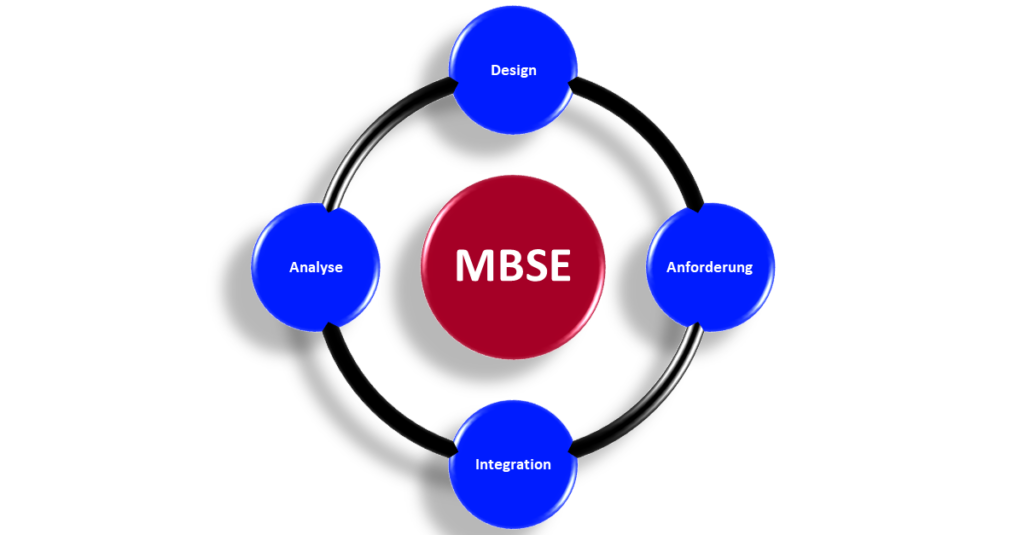
Model Based Systems Engineering
Many companies face ever-growing challenges such as short production times or high quality requirements, and the term MBSE is being mentioned more and more often. Read on to find out what MBSE means and how it works! Read more…
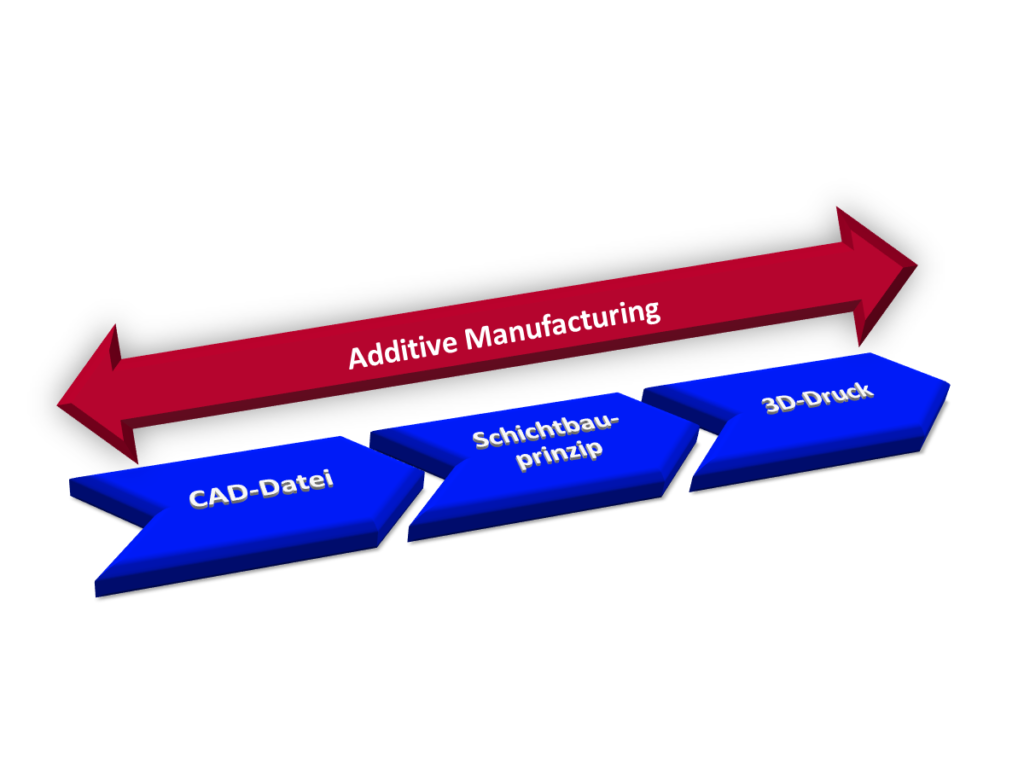
Additive Manufacturing – 3D printing as the manufacturing process of the future
Thanks to innovative technological processes such as additive manufacturing, guiding the process steps from the CAD file through to a finished 3D-printed model is no longer a major challenge. Find out in our article what defines the manufacturing process of the future and why this method is becoming increasingly important in industry! Read more…
Social Collaboration – networked collaboration as a model for the future?
In times of digital transformation, working processes in the business world are increasingly shifting to the digital level, and companies are aligning themselves with the principles of social media. In doing so, those involved are making use of the advantages of social collaboration, in the hope of optimising business processes through networked collaboration on projects using purposefully deployed tools. Read more…
Predictive Maintenance – maintenance that looks ahead
Industry 4.0, digital twin and big data – predictive maintenance has long been an integral part of these trending topics and is itself setting new standards in the world of the ‘Smart Factory’. Read more…
The “Digital Twin” phenomenon
Advancing digitalisation and connectivity in the manufacturing industry are confronting many companies with new problems. Future-proof yet practicable solutions are urgently being sought. Lower resource consumption, shorter production cycles and higher output rates can be production KPIs to be optimised. Artech Consulting shows why the digital twin could become a milestone in mechanical engineering. Read more…
Tips for training and consulting
In times of technological progress and the increasing digitalisation of the working world, traditional elements are increasingly falling away. In the field of training for skilled professionals, too, e-learning is increasingly replacing the traditional seminar. That is why ARTECH Consulting, as a consultancy, offers not only e-learning but also training courses for design software. In order to convey the required content to course participants efficiently, application- and system-related training must be coherently designed, and the trainer must take many technical and didactic aspects into account. Find out what really matters in training here!
Industry 4.0 – the intelligent factory of tomorrow
The digital age has long since arrived in industry. The intelligent networking of people, machines and products is in full swing. The driving force behind Industry 4.0 is the rapidly increasing digitalisation of business and society. Industry 4.0, with its ‘Smart Factory’, is thus setting new standards. Read more…
From small business to 15-time Oscar winner
Having started out as a small business with 16 employees, the US software company Autodesk grew from the tranquil Californian town of Sausalito into a global corporation. Find out all about the background to the Autodesk success story here!
Professional modelling and simulation with Inventor
With Inventor as 3D CAD software for modelling and simulation, users can design the right product for their particular market in 3D, thanks to numerous tools. Read more…
Founded by a small company and made big by a corporate giant
Teamcenter is one of the most widely used PLM solutions in the world. Founded in 1963 by a Californian company and acquired by the corporate giant Siemens in 2007, the software has become indispensable to engineers and suppliers alike. Read more…
Teamcenter – optimising the product in a global team
From design through market launch to disposal, a product passes through several life cycles. PLM systems such as Teamcenter help companies to keep track of the most important product data at all times. Read more…
AutoCAD – professional 2D drawing editor with 3D functions
AutoCAD is – as the name suggests – CAD design software from Autodesk. Whether 3D freeform shapes or documentation functions, AutoCAD enables companies to meet their individual requirements. Read more…
To the top thanks to awards and strong partners
Founded in 1985 as a small company for product development solutions in the US state of Massachusetts, the technology firm ‘Parametric Technology Corporation’ established itself on the market thanks to strong partners from the manufacturing industry and the IT world as well as targeted marketing strategies. How PTC became one of the world’s market leaders in technology solutions. Read more…
Parametric design with Ptc Creo
As a 3D product design toolset, Ptc Creo offers engineers ideal solutions for a fast product development process. Whether in 2D or 3D CAD – with this software, projects can be tackled both parametrically and directly. Read more…
Fast, efficient and flexible thanks to NX
Comprehensive product development solutions for complex projects are no problem with the PLM software NX from Siemens. As interactive design software, NX enables fast and efficient solutions for a wide variety of tasks. Read more…
From prototype to innovative product
CATIA is one of the world’s leading CAD systems and particularly excels in the three-dimensional design of models. To help users develop a marketable product from a prototype, ARTECH Consulting offers high-quality CATIA training and shows companies what the software can do. Read more…
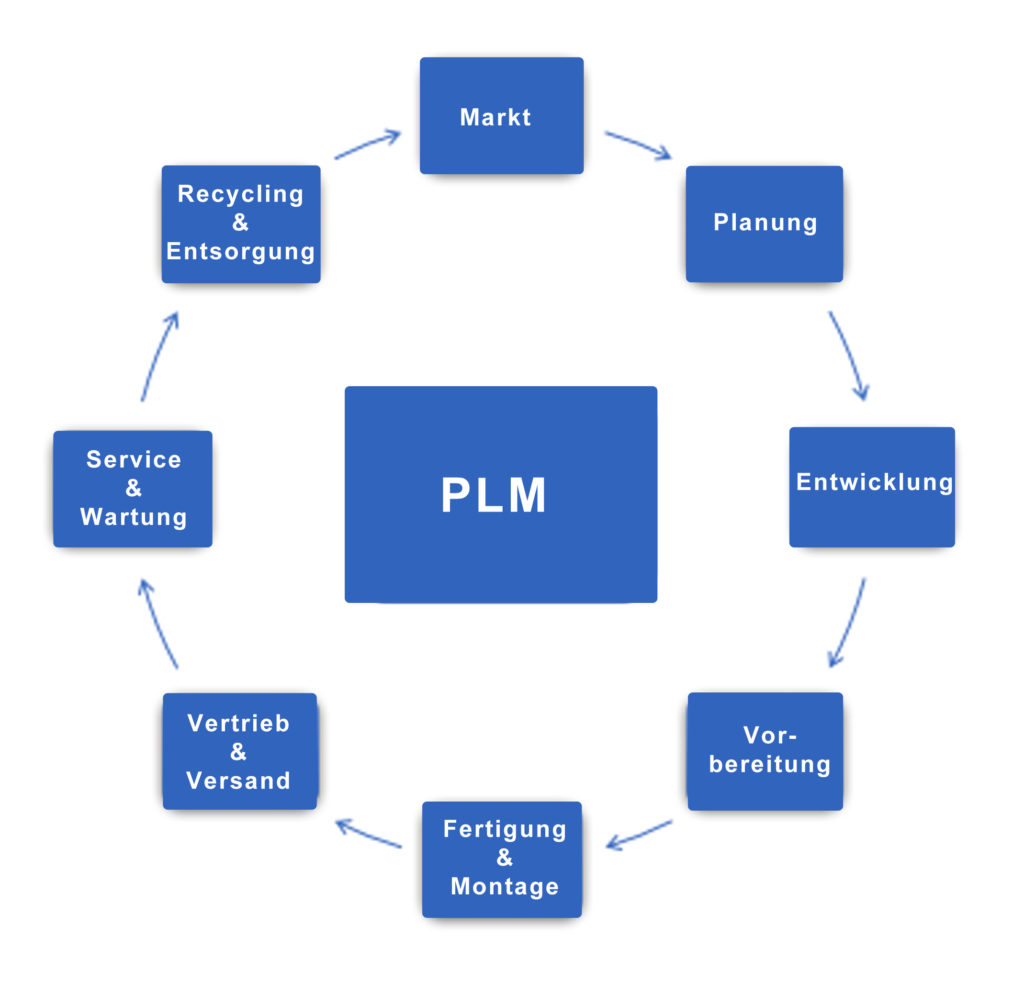
From an idea to a data genius
Originally emerging from a program for product data management, ‘Product Lifecycle Management’ developed into an important piece of software for product development. The steadily growing demand for electronic management systems established PLM on the IT market in the 1990s. Read more…
No matter where, no matter when – always keep track of product data with PLM
Having completed its first metres on the assembly line, an engine should ideally last for many years before reaching its final destination: recycling. ‘Product Lifecycle Management’ (PLM) is software for managing such product life cycles. Whether planning, manufacturing or maintenance – PLM enables uniform control of the processes. Read more…
From pencil sketch to 3D simulation
The term CAD originated in the mid-20th century with the development of a programming system. The first steps towards professional design software were taken in the 1960s at universities and in the aircraft industry. With the increasing introduction of PCs and ever better optimised software programs in the 1980s, CAD ultimately experienced a veritable boom in the engineering industry. Read more…
Professional design with CAD
As a consultancy, ARTECH Consulting offers training courses for design software. CAD is also part of the range. As a program for computer-aided design, the application serves companies as a complex expert system. Read more…
What distinguishes CAE from CAD?
ARTECH Consulting offers various training courses and consulting services for the common CAD and CAE systems. CAD stands for ‘Computer Aided Design’ and CAE stands for ‘Computer Aided Engineering’. Nevertheless, these two terms are often lumped together. However, this does not mean that the endings ‘Design’ and ‘Engineering’ are the only difference and that engineering merely refers to an extension of the CAD system. Read more…
CATIA – conquering the engineering market via the aviation industry
The 1960s are regarded as the birth of modern computer technology. Companies such as IBM and Siemens revolutionised the IT world and paved the way for the commercial use of software programs. CATIA also benefited from this. At the end of the 1960s, the French aircraft manufacturer Avions Marcel Dassault began creating interactive drawings and used CATIA for the first time in the development of the Alpha Jet. Find out how CATIA went on to become the world’s leading application in automotive development and in aerospace here!