
 Deutsch
The implementation of new CAD or PLM systems is rarely just an IT project. In addition to issues such as data migration, system integration, and process mapping, user acceptance is the key factor determining success.
This is precisely where it becomes clear: technical implementation and change management cannot be viewed in isolation. While technology lays the foundation, the organization determines whether the system is actually used in day-to-day operations.
In many projects, the initial focus is on the technical side. Systems function, processes are defined, adoption remains below expectations. Reasons for this often include a lack of user involvement, unclear communication, or training that is not practical enough.
Thus, the key success factors can be summarized from two perspectives:
Key Success Factors at a Glance
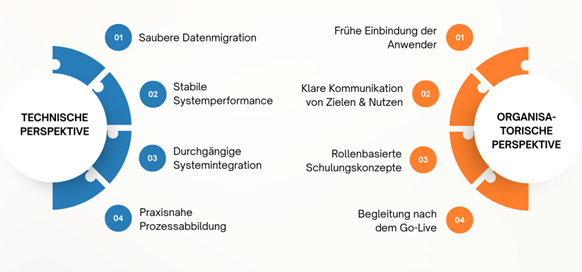
This comparison makes it clear: technical quality alone is not enough. Only when users understand, accept, and can confidently apply the new processes does the system deliver its added value.
This connection is particularly crucial in the CAD/PLM environment, where processes are closely interlinked and often company-specific. Training, communication, and system design must be consistently aligned with real-world work routines.
Conclusion
Successful system implementations occur where technology and change management are addressed together.
Companies that purposefully combine both perspectives not only create functional systems but also provide genuine value in everyday use.