
 Deutsch
The digitization of production is leading to a steadily growing volume of manufacturing data. Machines, sensors, and IT systems continuously provide information about production processes, equipment status, and quality metrics. However, the real added value is realized only when this data is systematically analyzed and used to inform decisions. This is precisely where Manufacturing Data Analytics (MDA) comes into play.
Manufacturing Data Analytics refers to the structured analysis of manufacturing data with the goal of making processes more transparent, efficient, and of higher quality. Instead of merely reacting to disruptions, companies can identify trends early on, analyze root causes, and systematically leverage opportunities for optimization.
Data as the Foundation of Smart Manufacturing
Smart manufacturing is based on the ability to link data from various sources. Production facilities, sensors, and MES, ERP, or PLM systems provide valuable information that, when combined, offers a comprehensive view of the manufacturing process.
Typical applications of manufacturing data analytics include:
- Monitoring the status of machines and equipment
- Analyzing quality deviations
- Optimizing production processes
- Reducing downtime
- More efficient use of energy and resources
Only by combining this information can we achieve the transparency required for data-driven decisions.
Prerequisites for Successful Implementation
For manufacturing data analytics to reach its full potential, both technical and organizational prerequisites must be in place.
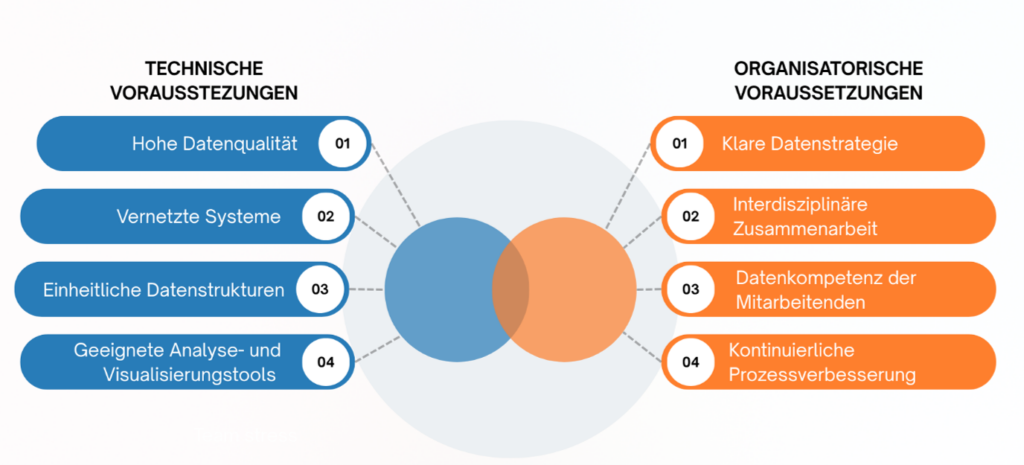
Only when technology, processes, and employees work together can reliable insights be derived from production data.
Conclusion
Manufacturing Data Analytics is a key building block on the path to smart manufacturing. The systematic analysis of manufacturing data creates transparency, improves the quality of decision-making, and supports the continuous optimization of processes.
Success depends not only on the volume of available data, but also on how effectively data is linked, evaluated, and translated into concrete actions. Only then can data serve as the foundation for high-performance and future-proof production.