
 Deutsch
The digitalisation of production opens up numerous opportunities for companies to make processes more transparent and to identify potential for improvement at an early stage. A modern machine data analysis (MDA) system forms the basis for well-informed decisions, reduces unplanned downtime and supports the continuous optimisation of manufacturing.
Despite these advantages, the introduction of an MDA solution does not always go smoothly in many companies. The reason for this often lies not in the technology used, but in staff acceptance. If their uncertainties and concerns are not addressed at an early stage, this can lead to resistance that may significantly compromise the success of the project.
Acceptance is the key to success
The introduction of an MDA solution is often viewed as a purely technical project. In reality, however, it is just as much a process of organisational change. This is because machine operators’ daily working practices change. New terminals, additional data entries or greater transparency regarding production data understandably raise questions. If these are not answered openly, uncertainties and reservations arise.
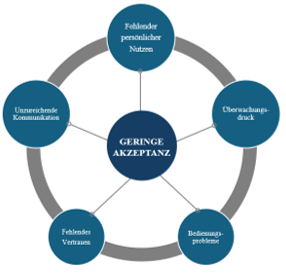
The most common causes of low acceptance are summarised in the overview below.
Successful implementation of an MDA solution
High data quality can only be achieved if the system is accepted by staff and used consistently. In addition to the technical implementation, organisational and human aspects should therefore also be taken into account.
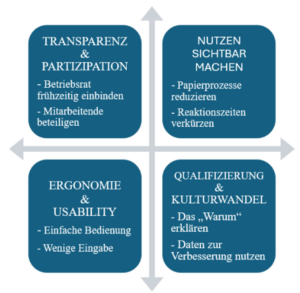
Key success factors include transparent communication, involving staff at an early stage, intuitive operation and targeted user training. The following overview sets out the key areas of focus for a successful MDA implementation.
Conclusion
The success of machine data collection does not depend solely on the software used or the technical functions. Rather, it is crucial that staff recognise the benefits of the system and develop confidence in using it.
By fostering acceptance, you lay the foundations for reliable data collection, higher data quality and, consequently, the sustainable optimisation of manufacturing processes.